How Many Dry Needling Sessions Do You Need?
There is no magic number. What the research says about how many sessions, how often, and when to change the plan.
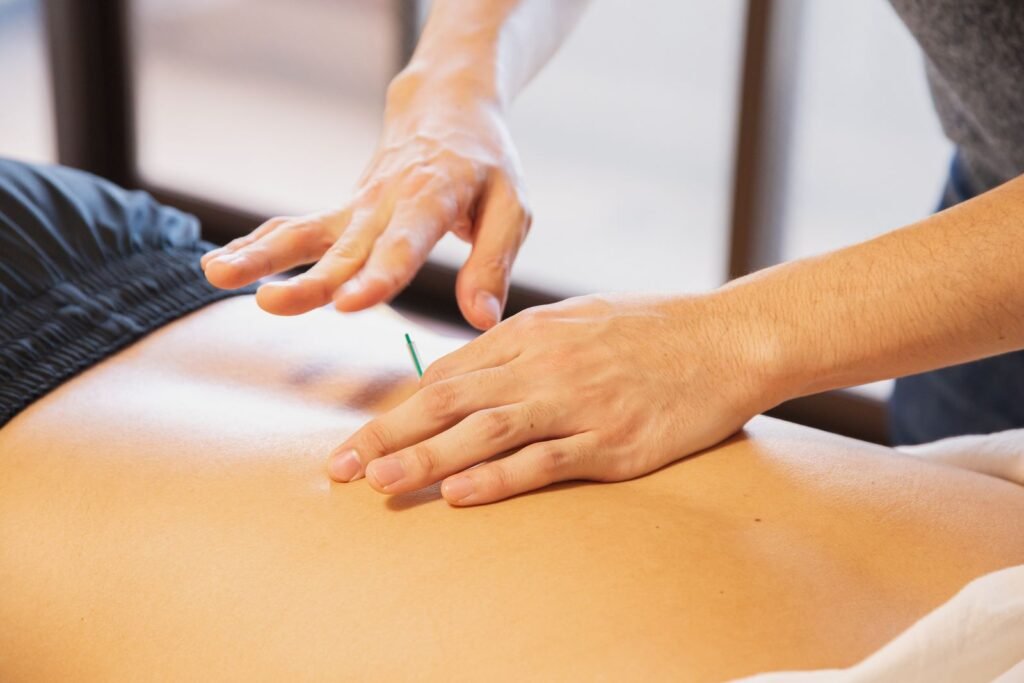
There is no fixed number of dry needling sessions that suits everyone, and research hasn’t found one. Trials range from a single session to several sessions spread over weeks, and a 2026 review found the number of sessions didn’t predict how well dry needling worked for neck pain. Reviews show dry needling can reduce pain in the short term, up to around three months, when compared with no treatment or sham needling. A practical approach is to review progress after the first two or three sessions and to use dry needling as one part of a plan that includes exercise.
The short version
- No magic number. A 2026 review of 71 comparisons found no reliable link between the number of sessions and pain relief for neck pain.
- Short courses are common in research. Almost 30% of studies used just one session or needled just one trigger point.
- The benefit is mostly short term. Reviews show less pain for up to about 12 weeks; long-term benefit is less certain.
- It works best as part of a plan. Dry needling eases pain; exercise and load changes help keep it away.
- Review early. If two or three sessions bring no meaningful change, the plan should change rather than continue.
How many dry needling sessions will I need?
It depends on the problem, how long you’ve had it, and how you respond. Some people notice a change after one session. Others need a few sessions alongside exercise. The research doesn’t support a standard course.
A systematic review published in 2026 looked specifically at treatment parameters in dry needling research, including the number of sessions, the number of trigger points needled and the muscle twitch responses produced. It found wide variation: in almost 30% of studies, only one session was held or only one trigger point was needled. For neck pain, where there was enough data to analyse, none of these parameters, including the number of sessions, explained how well dry needling worked. The authors concluded the evidence doesn’t yet show a reliable dose-response relationship.1
What affects the number of sessions
| Factor | Why it matters |
|---|---|
| How long you’ve had the problem | Pain that has built up over months often takes longer to change than a recent flare. |
| One area or several | Tension across the neck, shoulders and upper back may need more than one focused area. |
| Your response to the first sessions | A clear improvement suggests the approach suits you; no change is a reason to rethink. |
| What drives the pain | If long desk days, training load or stress keep the muscles tight, those need addressing too. |
| Exercise between sessions | Strength and movement work helps the change from needling last. |
How well does dry needling work?
Two systematic reviews of trials in which physiotherapists performed dry needling give a consistent picture:
- A 2017 review of 13 trials found very low- to moderate-quality evidence that dry needling reduced pain more than no treatment, sham needling or other treatments from immediately after treatment up to 12 weeks. For function, it beat no treatment or sham, but not other physiotherapy treatments, and evidence of long-term benefit was lacking.2
- A 2021 review found dry needling reduced pain more than no treatment, sham needling and other therapies at time points from 72 hours to 24 weeks, with low- to moderate-quality evidence.3
Put simply, dry needling can reduce pain, especially in the weeks after treatment. It’s less clear that it changes function on its own compared with other good physiotherapy. That’s why it’s usually combined with exercise rather than used alone. To understand what’s being treated, see our guide to trigger points.
How often should you have dry needling?
Trial schedules vary. Some use a single session; others space sessions about a week apart. For example, a 2026 trial in people with ankle or rear-foot injuries gave three sessions one week apart.4
Spacing sessions so that post-needling soreness has settled is sensible. Soreness is common and usually eases within a day or two. Our dry needling aftercare guide explains what’s normal.
How to tell if it’s working
- Pick one or two markers before you start: for example, how far you can turn your head, how long you can sit before pain starts, or a 0 to 10 pain score at the end of the day.
- Check them after each session: look for change over a few days, not just in the hour after treatment.
- Review after two or three sessions: a clear improvement means it’s worth continuing alongside exercise. No change means the plan should change.
- Keep up the exercises: the aim is to need needling less over time, not more.
Is dry needling safe?
For most people, side effects are minor and short-lived. A 2026 review of 59 studies found minor side effects, such as soreness, bruising or brief bleeding, were common, reported after anywhere from 0% to 48% of treatments depending on the study. Major adverse events were uncommon, at 0% to 0.43% per treatment, but serious complications such as a collapsed lung are possible, which is why dry needling should only be done by a trained, licensed practitioner.5 Our article on whether dry needling hurts covers what a session feels like.
Dry needling at Somatic Recovery
At Somatic Recovery, dry needling is offered in person in Dubai by Shubhangii Gaikwaad, a DHA-licensed physiotherapist, as part of an assessment-led physiotherapy plan, and how many sessions make sense is discussed after your assessment. You can read more about dry needling in Dubai, including who it suits and who should avoid it.
Dry needling may not be suitable, or needs extra care, if you
- Are pregnant, especially in the first trimester
- Take blood-thinning medicine or have a bleeding disorder
- Have an infection or skin problem in the area to be treated
- Have a strong fear of needles
- Have a pacemaker or another implanted device (relevant for electrical needling)
After treatment, get urgent medical help for sudden breathlessness or chest pain. In the UAE, call 998.
Frequently asked questions
How many dry needling sessions do you need?
There’s no fixed number. Research ranges from one session to several over a few weeks, and a 2026 review found the number of sessions didn’t predict results for neck pain. Reviewing progress after two or three sessions is a practical approach.
Can one session of dry needling help?
It can. Almost 30% of studies in a 2026 review used a single session or needled a single trigger point, and reviews show pain relief from immediately after treatment. Whether one session is enough depends on the problem and what else is done to address it.
How often can you have dry needling?
Many trials space sessions about a week apart. It makes sense to wait until any post-treatment soreness has settled, which usually takes a day or two.
How long do the effects of dry needling last?
Reviews show reduced pain for up to about 12 weeks in most studies, with some evidence up to 24 weeks. Long-term benefit is less certain, which is why exercise and changes to daily load are important.
Is dry needling better than exercise?
They do different jobs. Dry needling can ease pain in the short term; exercise builds strength and capacity. Reviews found dry needling wasn’t better than other physiotherapy treatments for function, so the two work best together.
References
- De Greef I, Chys M, De Sloovere M, et al. Do treatment parameters of dry needling influence its effect on pain? A systematic review and meta-analysis. J Man Manip Ther. 2026. Published online ahead of print.
- Gattie E, Cleland JA, Snodgrass S. The effectiveness of trigger point dry needling for musculoskeletal conditions by physical therapists: a systematic review and meta-analysis. J Orthop Sports Phys Ther. 2017;47(3):133-149.
- Sánchez-Infante J, Navarro-Santana MJ, Bravo-Sánchez A, et al. Is dry needling applied by physical therapists effective for pain in musculoskeletal conditions? A systematic review and meta-analysis. Phys Ther. 2021;101(3):pzab070.
- Albin SR, Hoffman LR, MacDonald CW, et al. Dry needling directly into trigger points is associated with improved gait parameters: a randomized controlled trial. J Man Manip Ther. 2026. Published online ahead of print.
- Rabanal-Rodríguez G, Simón-Alonso MA, Navarro-Santana MJ, et al. Frequency and severity of adverse events associated with dry needling: a systematic review and meta-analysis. Phys Ther. 2026;106(6):pzag050.

About Somatic Recovery
Somatic Recovery is the Dubai practice of Shubhangii Gaikwaad, DHA-Licensed Physiotherapist (MPT, Neurology) with 16 years of clinical experience. Sessions in person in Dubai and online worldwide, in English and Hindi.
This article is general information, not a diagnosis or a substitute for an individual assessment. If you have severe, sudden or worsening symptoms, see a doctor.
Somatic Recovery · Dubai & online
Want this looked at properly?
One assessment with a DHA-licensed physiotherapist to understand what is driving your symptoms, with a clear plan and an honest timeline.
Keep reading
 Dry NeedlingIs Dry Needling Safe? Side Effects, Risks and Who Should Avoid ItMinor soreness is common, serious problems are rare. What the research says about dry needling safety and who needs extra care.6 min read→
 Dry NeedlingDry Needling for Neck Pain and Headaches: Does It Work?Short-term relief for neck pain, promising but less certain for headaches. What the research says and how it fits with exercise.7 min read→
 Dry NeedlingTrigger Points Explained: Why Muscle Knots Refer PainWhy a knot in your shoulder can give you a headache, what science actually knows about trigger points, and what helps.8 min read→