Online Physiotherapy and Somatic Sessions: What Works by Video
A large 2024 trial found video physiotherapy as effective as in-person care for chronic knee pain. Here's what works online, what doesn't, and how to prepare.
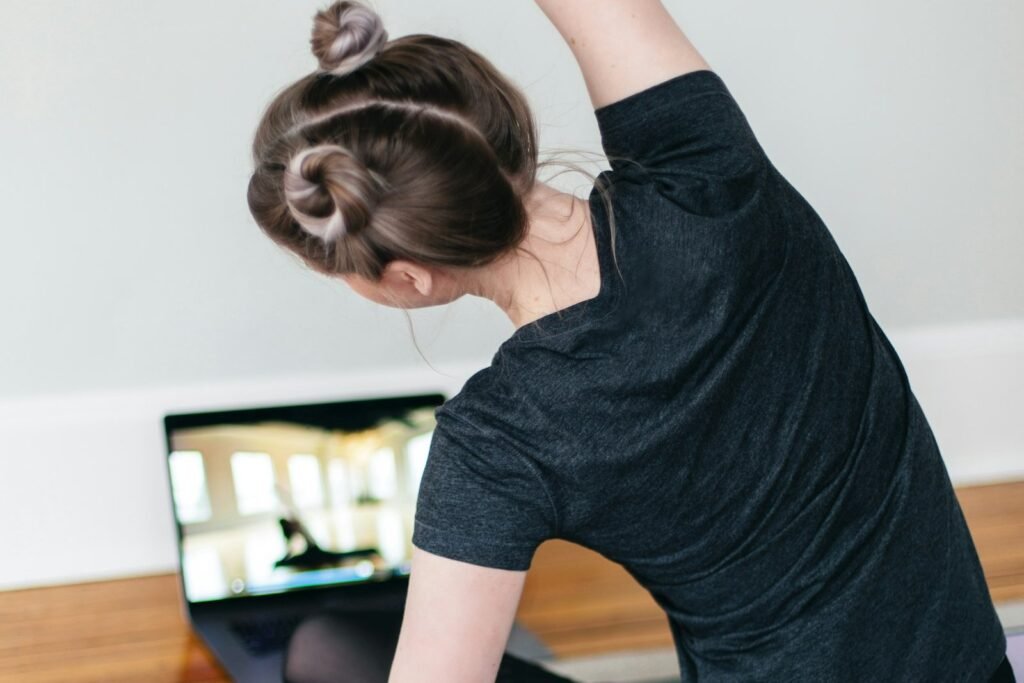
Online physiotherapy works better than most people expect. In a large 2024 trial of 394 adults with chronic knee pain, physiotherapy by video was just as effective as in-person care for pain and function, and reviews of other musculoskeletal conditions point the same way. Video suits anything built on movement, exercise, education and guided body awareness, which includes most somatic work. What it can’t do is hands-on treatment such as manual therapy or dry needling, or a full physical examination when the cause of pain is unclear. Many people get the best of both: an in-person assessment first, then regular online sessions.
The short version
- Video physiotherapy holds up in trials. For chronic knee pain, it was non-inferior to in-person care for both pain and function.
- It works across many conditions. A review found real-time video rehab gave similar improvements in function and pain to face-to-face care.
- Some things need the room. Manual therapy, dry needling, cupping and a hands-on examination can only happen in person.
- Somatic work translates well. Breath, movement and body awareness are guided, not hands-on, so they suit video.
- Tech hiccups are common but minor. In one study they happened in about a third of first calls and were usually fixed quickly.
Does online physiotherapy actually work?
The strongest evidence comes from the PEAK trial, published in The Lancet in 2024. Researchers in Australia randomly assigned 394 adults with chronic knee pain to five physiotherapy sessions either in person or by video, over three months.1
- Both groups improved by about 3 points on a 0 to 10 pain scale.
- Video sessions were non-inferior to in-person care for pain and for function, meaning they were not meaningfully worse.
- Side effects were similar in both groups, and none were serious.
Earlier research points the same way. A review of real-time video rehabilitation for a range of musculoskeletal conditions found that treatment delivered only by video was equivalent to face-to-face care for improving physical function, and improvements in pain were comparable too.2 Another review found positive effects on health outcomes and patient satisfaction, though it called for more long-term studies.3
Most of this research is on joint and muscle problems such as knee pain, back pain and recovery after surgery. It doesn’t mean every condition suits video, but it does show that the core of modern physiotherapy, which is exercise, movement retraining and education, can be delivered well through a screen.
What works well by video
| Works well online | Needs to be in person |
|---|---|
| Movement assessment (how you bend, squat, reach or walk) | Hands-on examination and special tests |
| Exercise and strength programmes, with technique feedback | Manual therapy and soft tissue release |
| Education: what’s causing pain and how to manage flare-ups | Dry needling |
| Breathwork and nervous-system regulation | Cupping and instrument-assisted soft tissue work |
| Somatic movement and body awareness practice | Hands-on fascial and myofascial work |
| Desk and home set-up review, using your own space | New or unexplained pain that needs a full examination |
| Follow-up sessions to progress a plan | Red-flag symptoms that need medical assessment |
One advantage of video is that your physiotherapist sees you where you actually live and work. They can check the desk that’s bothering your neck, or the stairs at home, and fit exercises to the space and equipment you really have.
Somatic sessions online
Somatic therapy suits video particularly well, because most of it is guided rather than hands-on. A session typically uses breath, slow movement and attention to body sensations to help the nervous system shift out of a constant stress response. The practitioner watches how you move and breathe, guides your attention, and adjusts the pace.
Some people find it easier to settle at home than in a clinic, which can help with this kind of work. The hands-on parts of somatic sessions, such as gentle release work, only happen in person, so online sessions focus on what you can feel and practise yourself. If you’re new to the idea, our guide to what somatic therapy is explains the main approaches and what the research shows.
How to get the most from an online session
Before your session
- Space: clear an area about 2 metres by 2 metres, with a mat or towel and a sturdy chair.
- Camera: use a laptop or tablet rather than a phone if you can, propped about hip height, so your whole body fits in the frame when you stand.
- Light: face a window or lamp, so you’re lit from the front rather than behind.
- Clothes: wear something comfortable that shows how you move, such as leggings or shorts and a fitted top.
- Connection: sit close to your Wi-Fi router, close other apps, and have headphones ready in case the sound is poor.
- Equipment: have water, a resistance band or light weights if you own them, and a cushion or pillow nearby.
- Privacy: choose a room where you won’t be interrupted, especially for somatic sessions.
Don’t worry too much about technical problems. In a study of video physiotherapy consultations, issues came up in 37% of first sessions and 19% of final sessions, mostly with audio or video during set-up. They were usually minor and quickly fixed, and sessions didn’t take noticeably longer.4
Online, in person, or both?
For many people the best plan is a mix. A first session in person allows a full hands-on assessment and any treatment that needs touch. After that, online sessions can carry the plan forward: checking progress, adjusting exercises, and continuing regulation work, without travel. If you live outside Dubai, or travel often, online sessions on their own can work well for exercise-based and somatic care.
At Somatic Recovery, Shubhangii Gaikwaad, a DHA-licensed physiotherapist, offers sessions in person in Dubai and online worldwide, in English and Hindi. Dry needling and hands-on treatment are only offered in person. You can read more about physiotherapy and somatic therapy sessions, or what to expect at a first physiotherapy session.
An in-person or medical assessment is better if you have
- New, severe or unexplained pain, or pain after a fall or accident
- Numbness, tingling or weakness in an arm or leg
- Pain with fever, unexplained weight loss, or a history of cancer
- Loss of bladder or bowel control, or numbness around the groin. Seek emergency care
- A high risk of falling during standing exercises at home without support
In the UAE, call 998 for an ambulance in an emergency.
Frequently asked questions
Is online physiotherapy as good as in person?
For many conditions, yes. In a 2024 trial of 394 adults with chronic knee pain, physiotherapy by video was non-inferior to in-person care for pain and function. Reviews of other muscle and joint conditions show similar results. Hands-on treatment and full examinations still need to be in person.
What can a physiotherapist do over video?
Assess how you move, design and progress an exercise programme, check your technique, explain what’s causing your pain, review your desk or home set-up, and guide breathwork and body-awareness practice.
Can somatic therapy be done online?
Yes. Most somatic work, including breath, slow movement and body awareness, is guided rather than hands-on, so it translates well to video. Hands-on release work only happens in person.
Can dry needling be done online?
No. Dry needling, manual therapy and cupping all need to be done in person by a trained, licensed practitioner.
What do I need for an online physiotherapy session?
A clear space of about 2 by 2 metres, a laptop or tablet set up so your whole body is visible, good lighting, comfortable clothes, a stable internet connection, and a quiet room.
References
- Hinman RS, Campbell PK, Kimp AJ, et al. Telerehabilitation consultations with a physiotherapist for chronic knee pain versus in-person consultations in Australia: the PEAK non-inferiority randomised controlled trial. Lancet. 2024;403(10433):1267-1278.
- Cottrell MA, Galea OA, O’Leary SP, Hill AJ, Russell TG. Real-time telerehabilitation for the treatment of musculoskeletal conditions is effective and comparable to standard practice: a systematic review and meta-analysis. Clin Rehabil. 2017;31(5):625-638.
- Grona SL, Bath B, Busch A, Rotter T, Trask C, Harrison E. Use of videoconferencing for physical therapy in people with musculoskeletal conditions: a systematic review. J Telemed Telecare. 2018;24(5):341-355.
- Ross MH, Russell T, Bennell KL, et al. Technical issues occur but are infrequent and have little impact on physiotherapist-delivered videoconferencing consultations for knee osteoarthritis: a descriptive study. Musculoskelet Sci Pract. 2023;66:102782.

About Somatic Recovery
Somatic Recovery is the Dubai practice of Shubhangii Gaikwaad, DHA-Licensed Physiotherapist (MPT, Neurology) with 16 years of clinical experience. Sessions in person in Dubai and online worldwide, in English and Hindi.
This article is general information, not a diagnosis or a substitute for an individual assessment. If you have severe, sudden or worsening symptoms, see a doctor.
Somatic Recovery · Dubai & online
Want this looked at properly?
One assessment with a DHA-licensed physiotherapist to understand what is driving your symptoms, with a clear plan and an honest timeline.
Keep reading
 PhysiotherapyKnee Pain on Stairs: Causes and What HelpsSteps hurt, especially going down? Why stairs load the kneecap, the usual causes, and how hip and knee strength helps.6 min read→
 PhysiotherapyRotator Cuff Pain: Symptoms, Causes and What HelpsShoulder hurts when you lift your arm? What rotator cuff pain is, why exercise comes first, and when to see a doctor.7 min read→
 PhysiotherapyHeadaches From the Neck: Cervicogenic Headache ExplainedWhen the headache starts in your neck. How to spot a cervicogenic headache and why neck exercises help.6 min read→