Headaches From the Neck: Cervicogenic Headache Explained
When the headache starts in your neck. How to spot a cervicogenic headache and why neck exercises help.
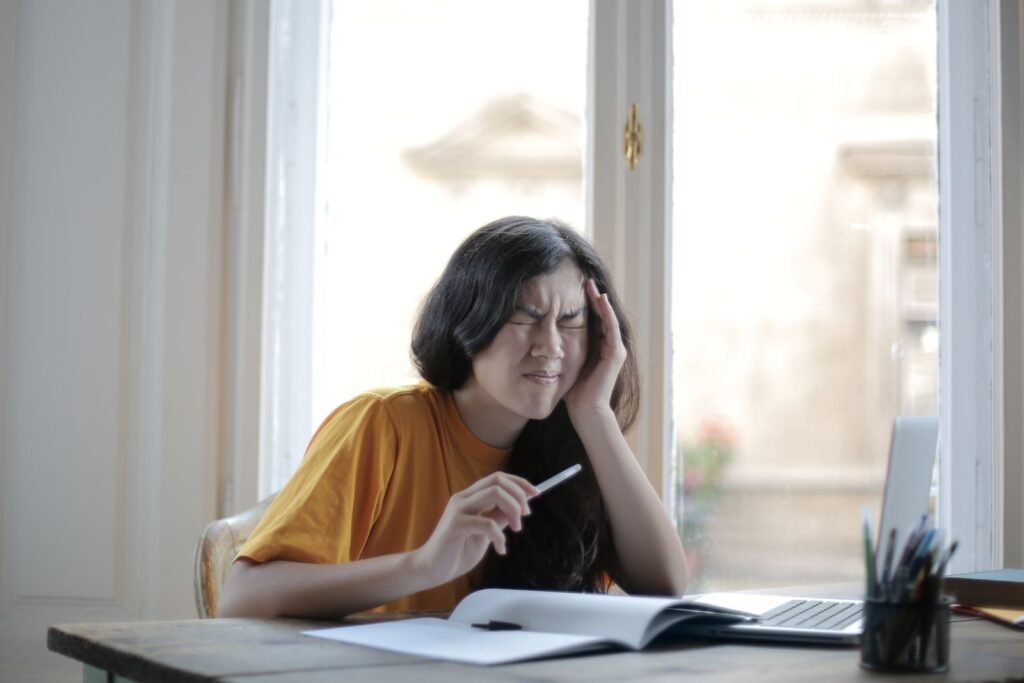
A headache from the neck, called a cervicogenic headache, is caused by a problem in the joints, discs or muscles of the upper neck, with pain that is felt in the head. It’s usually on one side, starts in the neck or the back of the head and spreads forwards, and is often set off by neck movement or holding one position for a long time. Physiotherapy is a first-line treatment: a large trial found that specific neck exercises and hands-on treatment each reduced how often headaches happened and how strong they were, with benefits still there a year later. Some headaches need a doctor first, so it’s worth knowing the warning signs.
The short version
- The pain starts in the neck. Cervicogenic headache comes from the upper neck, but you feel it in your head, often on one side.
- Neck movement is a clue. Turning your head, sustained postures or pressing on the upper neck often bring it on.
- Exercise and hands-on treatment help. In a trial of 200 people, both reduced headache frequency and intensity, and the benefit lasted 12 months.
- The evidence is moderate. A review of 20 trials found manual and exercise therapy may reduce headache intensity, frequency and disability.
- Some headaches are urgent. A sudden, severe or unusual headache needs a doctor, not a physiotherapist, first.
What is a cervicogenic headache?
Cervicogenic headache is a secondary headache, meaning it’s caused by another problem rather than being a headache disorder on its own. The International Headache Society defines it as headache caused by a disorder of the cervical spine, the bones, discs or soft tissues of the neck. For the diagnosis, there needs to be evidence that the neck problem is causing the headache, for example the headache started alongside the neck problem, gets better as the neck improves, or comes with reduced neck movement and is made worse by certain neck movements.1
The upper neck shares nerve pathways with the head, which is why pain from joints and muscles at the top of the neck can be felt behind the eye, at the temple or across the forehead.
Symptoms of a headache from the neck
- Pain usually on one side, starting at the neck or base of the skull and spreading forwards
- Headache brought on by neck movement, awkward positions or long periods at a screen
- Stiff neck, often with less rotation to one side
- Pain when pressing on the upper neck or base of the skull
- Sometimes shoulder or arm discomfort on the same side
Cervicogenic headache, tension headache or migraine?
These can overlap, and some people have more than one type. The table shows typical patterns, but a proper assessment is the best way to tell them apart.
| Cervicogenic headache | Tension-type headache | Migraine | |
|---|---|---|---|
| Where | Usually one side, neck to head | Both sides, band-like | Often one side, throbbing |
| Neck involvement | Neck movement brings it on | Tight neck and shoulders common | Neck pain can occur, but isn’t the cause |
| Other symptoms | Stiff neck, reduced rotation | Pressing or tightening feeling | Nausea, sensitivity to light or sound, sometimes aura |
| Who to see first | Physiotherapist or doctor | Doctor or physiotherapist | Doctor |
What helps headaches from the neck?
Specific neck exercises
In a well-known randomised trial, 200 people with cervicogenic headache were given hands-on manipulative therapy, a low-load exercise programme for the deep neck and shoulder-blade muscles, both, or no treatment, over 6 weeks. At 12 months, both manipulative therapy and exercise had significantly reduced headache frequency and intensity, as well as neck pain. Combining the two wasn’t significantly better than either alone, though 10% more people gained relief with the combination.2
Hands-on treatment
A 2022 review of 20 trials with 1,439 people found that manual and exercise therapy may reduce headache intensity, frequency and disability in the short and long term. Most trials had a high risk of bias, but the higher-quality trials gave moderate-quality evidence for spinal manipulation compared with sham treatment.3 Manipulation of the neck is a specialised technique, and many physiotherapists use gentler mobilisation instead.
Dry needling
Dry needling of tight neck and shoulder muscles is sometimes added. A 2021 review found it relieved headache pain about as well as other treatments in the short term, with more improvement in headache-related disability, though the evidence was low quality.4 Our guide to dry needling for neck pain and headaches covers this in more detail.
A gentle deep-neck exercise to try
- Lie on your back with your knees bent and a small folded towel under your head.
- Gently nod as if saying a small “yes”, sliding the back of your head up the towel. Keep your jaw relaxed and the front of your neck soft.
- Hold for 5 to 10 seconds while breathing normally, then relax.
- Repeat 10 times, once or twice a day.
This should feel like a gentle effort deep in the front of the neck, not a strain. Stop if it brings on your headache or causes dizziness.
Everyday changes that help
- Break up screen time: look up, turn your head gently and roll your shoulders every 30 to 45 minutes. Our guide to tech neck explains why time in one position matters.
- Raise your screen: bring the top of your laptop or monitor closer to eye level.
- Check your pillow: aim to keep your neck level with the rest of your spine when lying on your side.
- Ease shoulder tension: tight shoulders and upper back often go hand in hand with neck-related headaches. See tight shoulders and upper back.
How physiotherapy at Somatic Recovery helps
Shubhangii Gaikwaad, a DHA-licensed physiotherapist, will ask about your headache pattern, check how your neck moves and which movements or pressure points reproduce the headache, and look for any signs that need a doctor’s input. The plan usually combines deep neck and shoulder exercises, hands-on treatment where it helps, advice on desk set-up and sleep, and dry needling if it suits you. Read more about our physiotherapy in Dubai.
Get urgent medical help (call 998 in the UAE) for a headache that
- Comes on suddenly and severely, like a blow to the head
- Follows a head or neck injury, or a fall
- Comes with fever, a stiff neck and feeling very unwell, or a rash
- Comes with weakness, numbness, slurred speech, confusion, double vision or loss of balance
Also see a doctor for a new headache pattern, especially if you’re over 50, or a headache that is getting steadily worse.
Frequently asked questions
Can neck problems cause headaches?
Yes. A cervicogenic headache is caused by a problem in the joints, discs or muscles of the upper neck. The pain is felt in the head, often on one side, and is usually brought on by neck movement or sustained positions.
How do I know if my headache is coming from my neck?
Clues include pain that starts in the neck or base of the skull, is mostly on one side, comes with a stiff neck, and is triggered by turning your head or long periods at a screen. A physiotherapist or doctor can assess it properly.
What is the best treatment for cervicogenic headache?
Physiotherapy with specific neck exercises and hands-on treatment has good support. In a trial of 200 people, both reduced headache frequency and intensity, and the benefits lasted 12 months.
How long does a cervicogenic headache last?
Individual headaches can last hours to days, and they often come and go for weeks or months until the neck problem is treated. With the right exercises and treatment, many people see fewer and milder headaches.
When is a headache serious?
Get urgent help for a sudden, severe headache, a headache after a head injury, or one with fever and a stiff neck, weakness, numbness, confusion or vision changes. In the UAE, call 998.
References
- Headache Classification Committee of the International Headache Society. The International Classification of Headache Disorders, 3rd edition. Cephalalgia. 2018;38(1):1-211.
- Jull G, Trott P, Potter H, et al. A randomized controlled trial of exercise and manipulative therapy for cervicogenic headache. Spine. 2002;27(17):1835-1843.
- Bini P, Hohenschurz-Schmidt D, Masullo V, Pitt D, Draper-Rodi J. The effectiveness of manual and exercise therapy on headache intensity and frequency among patients with cervicogenic headache: a systematic review and meta-analysis. Chiropr Man Therap. 2022;30(1):49.
- Pourahmadi M, Dommerholt J, Fernández-de-las-Peñas C, et al. Dry needling for the treatment of tension-type, cervicogenic, or migraine headaches: a systematic review and meta-analysis. Phys Ther. 2021;101(5):pzab068.

About Somatic Recovery
Somatic Recovery is the Dubai practice of Shubhangii Gaikwaad, DHA-Licensed Physiotherapist (MPT, Neurology) with 16 years of clinical experience. Sessions in person in Dubai and online worldwide, in English and Hindi.
This article is general information, not a diagnosis or a substitute for an individual assessment. If you have severe, sudden or worsening symptoms, see a doctor.
Somatic Recovery · Dubai & online
Want this looked at properly?
One assessment with a DHA-licensed physiotherapist to understand what is driving your symptoms, with a clear plan and an honest timeline.
Keep reading
 PhysiotherapyRotator Cuff Pain: Symptoms, Causes and What HelpsShoulder hurts when you lift your arm? What rotator cuff pain is, why exercise comes first, and when to see a doctor.7 min read→
 PhysiotherapyFrozen Shoulder: Symptoms, Stages and What Actually HelpsPainful, stiff and slow to settle. What frozen shoulder is, how long it lasts, and why early injection plus exercise has the best evidence.7 min read→
 PhysiotherapyOnline Physiotherapy and Somatic Sessions: What Works by VideoA large 2024 trial found video physiotherapy as effective as in-person care for chronic knee pain. Here's what works online, what doesn't, and how to prepare.6 min read→