Why Is My Back Stiff in the Morning? Causes and What Helps
Usually it is your spine waking up, not damage. Why it happens, a 3-minute routine before you get up, and the pattern worth checking.
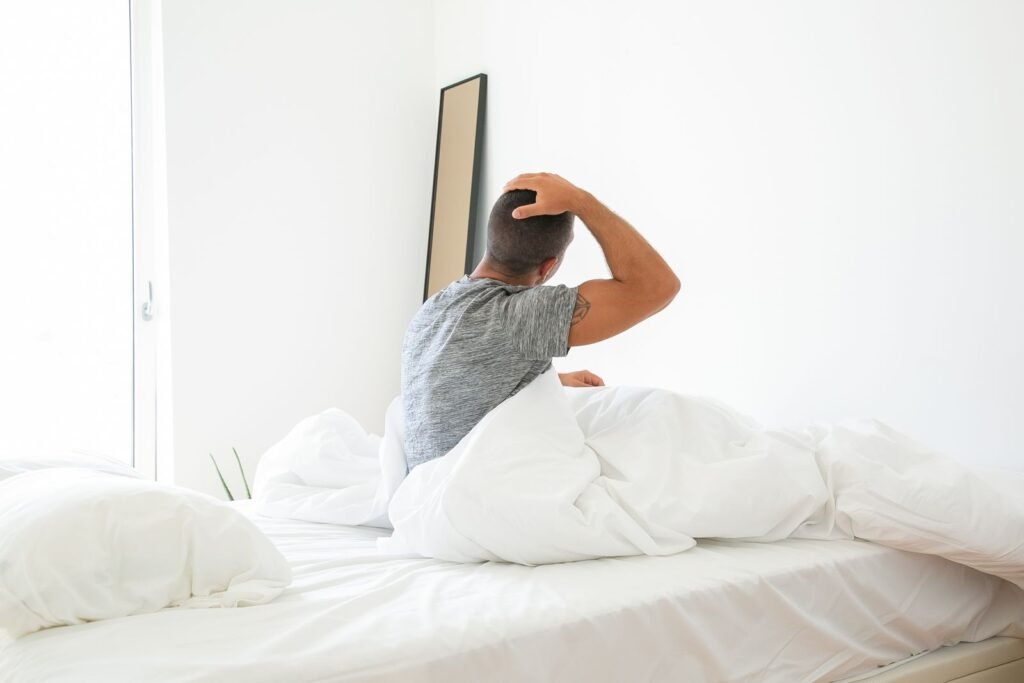
Morning back stiffness is common, and for most people it eases once they start moving. After hours lying still, the discs in your spine hold more fluid and the muscles and joints around them have barely moved, so the first few bends of the day can feel tight. Gentle movement before you get up, going easy on bending first thing, and a supportive medium-firm mattress all help. Stiffness that keeps coming back for months, wakes you in the second half of the night, and gets better with movement rather than rest is worth checking with a doctor, especially if it started before age 45.
The short version
- It’s usually not a sign of damage. Your spine has been still for hours, and the discs take on fluid overnight, so it needs a little time to loosen up.
- Go easy on bending first thing. In a trial of 85 people with ongoing back pain, learning to limit bending in the early morning reduced pain compared with sham exercises.
- Move before you get up. A few gentle movements in bed, then rolling onto your side to stand, can make the first minutes easier.
- Medium-firm beats very firm. In a trial of 313 adults with chronic back pain, a medium-firm mattress led to less pain in bed and less disability than a firm one.
- One pattern needs checking. Back pain that started before 45, has lasted over 3 months and improves with movement can be a sign of an inflammatory condition.
Why is my back stiff in the morning?
A few things happen overnight that make the spine feel stiffer when you first get up:
- Your discs hold more fluid. While you lie down, the discs between the bones of your spine are under less load and take on fluid. Researchers have linked this to a higher risk of back trouble with bending in the early morning, before the discs have settled during the day.1
- You’ve been still for hours. Muscles and joints that haven’t moved all night often feel tight until they warm up.
- Your mattress matters. In people with chronic back pain, a very firm mattress has been linked to more pain in bed than a medium-firm one.2
- Ongoing back pain makes it more noticeable. If your back is already sensitive, the first movements of the day are often when you feel it most. Our guide to why back pain keeps coming back explains why.
Is morning back stiffness normal?
For most people with everyday back pain, yes. The typical pattern is stiffness that eases as you get moving, feels better after a warm shower or a short walk, and may return after sitting still for a long time. That pattern usually responds well to staying active and a few changes to your morning.
A different pattern can point to inflammatory back pain, such as axial spondyloarthritis. The table below shows how the two usually differ.
| Everyday back stiffness | Pattern worth checking | |
|---|---|---|
| When it started | Any age, often after a change in activity | Before age 45, often before 35 |
| How long | Comes and goes, often settles within weeks | Longer than 3 months |
| Night | Usually comfortable once you find a position | Wakes you in the second half of the night |
| Movement vs rest | Eases with movement, may also ease with rest | Improves with movement, not with rest |
| Other clues | Usually none | Buttock pain, psoriasis, or a close relative with spondyloarthritis |
The UK’s National Institute for Health and Care Excellence (NICE) advises referral to a rheumatologist when back pain started before 45, has lasted longer than 3 months, and comes with four or more features such as waking in the second half of the night, buttock pain, improvement with movement, or a close relative with spondyloarthritis.4
What helps morning back stiffness?
Go easy on bending first thing
In a randomised trial, 85 people with persistent or recurring low back pain were split into two groups. One group was taught to limit bending forward in the early morning, when the discs hold the most fluid. The other group did six exercises known not to help. The early-morning group had significantly less pain, fewer days in pain and used less pain medication.1 Bending later in the day isn’t harmful; the idea is simply to give your back time to settle first.
Move gently before you get up
A few slow movements in bed can take the edge off the first steps of the day. The routine below takes about three minutes.
A 3-minute routine before you get up
- Knee hugs: lie on your back with knees bent. Gently bring one knee towards your chest, hold for a slow breath, then swap. 5 each side.
- Knee rocks: keep both knees together and let them sway slowly from side to side, staying in a comfortable range. 10 times.
- Pelvic tilts: gently flatten your lower back into the bed, then relax. 10 times.
- Roll to stand: roll onto your side, drop your legs over the edge of the bed and push up with your arms, keeping your back fairly straight.
Stop any movement that causes sharp pain or sends pain down your leg.
Check your mattress
A firm mattress is often recommended for back pain, but the research doesn’t support very firm. In a double-blind trial of 313 adults with chronic low back pain who had pain in bed and on rising, those given a medium-firm mattress had less pain while lying in bed and less disability after 90 days than those given a firm one.2 A 2026 review of 47 studies reached a similar conclusion: the evidence most consistently favoured medium-firm mattresses over very firm or very soft ones.3
Stay active during the day
Regular movement keeps your back more comfortable overall, mornings included. NICE recommends encouraging people with low back pain to stay active and suggests considering a group exercise programme.5 Our guides to exercises for lower back pain and lower back pain from sitting have practical ideas.
When to get morning back stiffness checked
See a doctor or physiotherapist if:
- Your back pain started before 45 and has lasted more than 3 months, especially if it wakes you in the second half of the night and improves when you move
- Stiffness is getting worse over weeks rather than better
- You also have pain or swelling in other joints, heel pain, or psoriasis
- Stiffness and pain are stopping you sleeping or working
How physiotherapy helps
A physiotherapist will ask about when your stiffness started, how long it lasts and what eases it, and check how your back moves. If the pattern suggests an inflammatory cause, you’ll be referred for medical assessment. For everyday stiffness, the plan usually includes a short morning routine, strength and mobility work, advice on sitting, sleep and bending, and hands-on treatment where it helps. Read more about our back pain treatment in Dubai.
Get emergency care (call 998 in the UAE) if you have
- New difficulty passing urine, or loss of bladder or bowel control
- Numbness around the groin, buttocks or genitals
- Weakness in one or both legs that is getting worse
- Back pain with fever, unexplained weight loss, or after a fall or accident
See our guide to back pain red flags for more.
Frequently asked questions
Why is my back stiff in the morning but fine later?
Overnight, the discs in your spine take on fluid and your muscles and joints are still for hours. Once you start moving, the stiffness usually eases. This pattern is common with everyday back pain and isn’t usually a sign of damage.
Is it bad to bend over first thing in the morning?
It isn’t dangerous, but going easy on bending early in the day can help if you have ongoing back pain. In a trial of 85 people, learning to limit early-morning bending reduced pain compared with sham exercises.
What is the best mattress for morning back pain?
Research favours medium-firm. In a trial of 313 adults with chronic low back pain, a medium-firm mattress led to less pain in bed and less disability than a firm one, and a review of 47 studies also favoured medium-firm over very firm or very soft.
When is morning back stiffness a sign of something more serious?
Get it checked if your back pain started before 45, has lasted more than 3 months, wakes you in the second half of the night and improves with movement rather than rest. These can be signs of an inflammatory condition such as axial spondyloarthritis.
What can I do in bed to ease a stiff back?
Try gentle knee hugs, slow knee rocks and pelvic tilts on your back, then roll onto your side and push up with your arms to stand. Stop if anything causes sharp pain or sends pain down your leg.
References
- Snook SH, Webster BS, McGorry RW, Fogleman MT, McCann KB. The reduction of chronic nonspecific low back pain through the control of early morning lumbar flexion: a randomized controlled trial. Spine. 1998;23(23):2601-2607.
- Kovacs FM, Abraira V, Peña A, et al. Effect of firmness of mattress on chronic non-specific low-back pain: randomised, double-blind, controlled, multicentre trial. Lancet. 2003;362(9396):1599-1604.
- Caggiari G, Petrucci F, Pescia S, et al. Mattress impact on lifestyle and back pain: a 25-year orthopedic literature review guideline. J Orthop Traumatol. 2026;27(1):53.
- National Institute for Health and Care Excellence. Spondyloarthritis in over 16s: diagnosis and management (NG65). London: NICE; 2017.
- National Institute for Health and Care Excellence. Low back pain and sciatica in over 16s: assessment and management (NG59). London: NICE; 2016, updated 2020.

About Somatic Recovery
Somatic Recovery is the Dubai practice of Shubhangii Gaikwaad, DHA-Licensed Physiotherapist (MPT, Neurology) with 16 years of clinical experience. Sessions in person in Dubai and online worldwide, in English and Hindi.
This article is general information, not a diagnosis or a substitute for an individual assessment. If you have severe, sudden or worsening symptoms, see a doctor.
Somatic Recovery · Dubai & online
Want this looked at properly?
One assessment with a DHA-licensed physiotherapist to understand what is driving your symptoms, with a clear plan and an honest timeline.
Keep reading
 Back PainLower Back Pain When Bending Forward: Causes and What HelpsBending isn't the enemy. Why your back hurts when you bend, what scans really show, and how to get comfortable bending again.8 min read→
 Back PainIs Walking Good for Back Pain? What the Research SaysOne of the simplest things you can do for your back. How much walking helps, how to build up, and what the WalkBack trial found.6 min read→
 Back PainSlipped Disc: Symptoms, Recovery Time and What HelpsMost slipped discs get better without surgery. Here is what the research says about recovery time, scans and what actually helps.7 min read→