Lower Back Pain from Sitting All Day: Causes and What Helps
Sitting isn't the whole story. What the research says about desk-related back pain, and the breaks, set-up and exercises that make a difference.
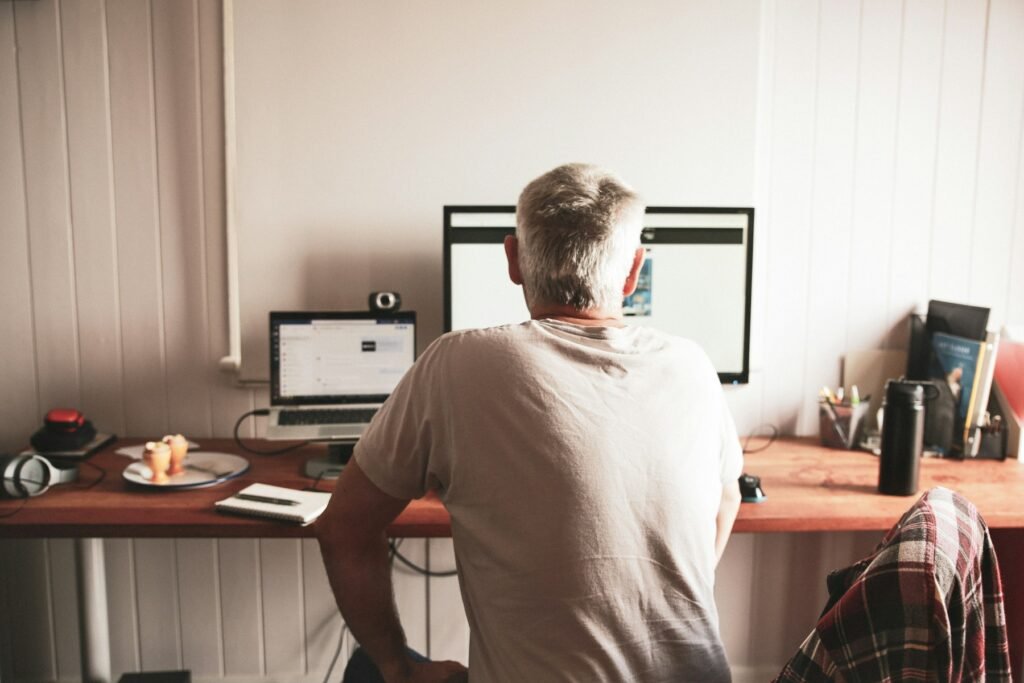
Lower back pain from sitting all day is rarely caused by sitting alone. Research suggests the bigger problem is sitting for long, unbroken stretches, often combined with low overall activity, a long drive and a busy, stressful day. For most people it eases with regular movement breaks, a few targeted exercises and a set-up that lets you change position easily. If it keeps coming back, a physiotherapy assessment can find what is driving it.
The short version
- Sitting isn’t the villain on its own. Large reviews have not found that sitting by itself causes back pain, but long unbroken sitting, vibration from driving and awkward positions add up.
- There is no single “perfect” posture. The most comfortable posture is usually the next one: change position often.
- Breaks work best when they’re short and frequent: a minute or two every 30 to 45 minutes beats one long break.
- Exercise is the best-supported treatment for back pain that has lasted more than three months.
- See a doctor first if back pain comes with numbness around the groin, bladder or bowel changes, fever, unexplained weight loss or leg weakness.
Does sitting actually cause lower back pain?
It’s the obvious suspect, and plenty of people notice their back aches most at the end of a long day at a desk. But the research is more nuanced than “sitting is bad for your back”.
A systematic review of occupational sitting found strong, consistent evidence of no association between sitting at work and low back pain, and no evidence that more sitting meant more pain.2 Another review found the same for sitting alone, but the picture changed when other factors were added. In jobs that combine long sitting with whole-body vibration (such as driving) or awkward postures, the risk of back pain roughly quadrupled.3
A larger umbrella review of 41 systematic reviews reached a similar conclusion for posture in general: associations exist, but there is no consensus that any particular posture or physical exposure causes back pain.4
That fits what we know about back pain overall. For the large majority of people, no single structural cause can be identified, and pain is shaped by a mix of physical, psychological and lifestyle factors.1
Why your back aches after a long day at the desk
So if sitting isn’t the whole story, why does your lower back feel worse by 6pm? A few things usually combine:
- Staying still for too long. Holding one position keeps the same tissues loaded without a break. The ache is often your body asking you to move rather than a sign of damage.
- Stiffness and deconditioning. Long hours in a chair often mean less walking, less strength work and tighter hips, so the back has less capacity to handle the day.
- The commute. Long drives add vibration and another hour or two of sitting on top of the workday.
- Stress, sleep and deadlines. These change how sensitive the nervous system is to pain, which is why the same chair can feel fine on holiday and terrible during a hard week.
- A set-up that locks you in place. A laptop on a low table or a chair you can’t adjust makes it harder to shift position, so you stay in one shape for longer.
Is there a correct sitting posture?
Probably not one that suits everyone. The research on “good” and “bad” posture is mixed,4 and people with very different sitting styles can be pain-free. A more useful rule is that no posture is good for eight hours. Slouching for a while is fine; slouching all day without moving is the problem, and the same goes for sitting bolt upright.
That said, a sensible set-up makes it easier to change position and stay comfortable. Use it as a starting point, not a cure:
| Set-up | A good starting point |
|---|---|
| Chair height | Feet flat on the floor (or a footrest), knees roughly level with or slightly below your hips |
| Back support | Sit back into the chair so it supports you; a small cushion at the lower back can feel better for some people |
| Screen | Top of the screen at or a little below eye level, about an arm’s length away |
| Laptop | Raise it on a stand and use a separate keyboard and mouse if you work on it for hours |
| Desk | Elbows close to 90 degrees, shoulders relaxed, wrists not bent up |
| Your phone | Take calls standing or walking where you can |
Movement breaks: what actually helps
Breaking up sitting is the single most practical change for most people, and there is decent evidence on how to do it. A Cochrane review of workplace interventions found:5
- Sit-stand desks reduced sitting at work by around 100 minutes per day in the short term, and by about an hour a day over 3 to 12 months.
- Short, frequent breaks (one to two minutes every half hour) cut sitting time by about 40 minutes a day compared with two longer 15-minute breaks.
- Computer prompts reminding people to stand also reduced long, unbroken sitting bouts.
That review measured sitting time rather than back pain, so a standing desk is a tool for moving more, not a treatment in itself. Standing still all day has its own problems. The goal is variety.
A two-minute desk reset
Every 30 to 45 minutes, set a reminder and do this:
- Stand up and walk for 30 seconds: to the water cooler, the window, anywhere.
- Hands on your lower back, gently lean back 5 times.
- Step one foot back into a small lunge and hold for 20 seconds each side to stretch the front of the hip.
- Roll your shoulders back and take three slow breaths out.
- Sit back down in a slightly different position from before.
Simple exercises for desk-related back pain
For back pain lasting more than three months, exercise has the strongest evidence of any treatment. A Cochrane review of 249 trials found moderate-certainty evidence that exercise reduces pain compared with no treatment or usual care.6 No single exercise type was clearly best, so the right programme is the one that suits your body and that you will actually do. Our guide to exercises for lower back pain goes through what the research supports in more detail. These are common, gentle starting points:
- Walking: 10 to 20 minutes most days, ideally broken into short walks across the day.
- Cat-cow: on hands and knees, slowly round and then gently arch your back, 8 to 10 times.
- Glute bridge: lying on your back with knees bent, lift your hips, hold for two seconds and lower, 10 to 12 times.
- Hip flexor stretch: half-kneeling, tuck your pelvis under and shift forward until you feel the front of the hip, 30 seconds each side.
- Sit-to-stand: stand up from your chair and sit back down slowly without using your hands, 10 times. It builds the leg strength you use all day.
Mild discomfort while exercising is usually fine. Pain that is sharp, spreads down the leg or is clearly worse the next day is a sign to ease off and get advice. A physiotherapist can adjust the plan to what your assessment shows.
Driving and the Dubai commute
Many people in Dubai spend an hour or more a day in the car on top of a desk job, and driving adds the vibration that research links to higher back pain risk.3 A few small changes help:
- Move the seat close enough that your knees stay slightly bent when the pedals are fully pressed.
- Keep the backrest only slightly reclined, so you’re not reaching for the wheel.
- On longer drives, stop and walk for a few minutes every hour or so.
- Avoid lifting heavy bags straight out of the boot after a long drive; give yourself a minute to move first.
Sitting less is a long-term health habit, not just a back habit
Your back is often the first thing to complain, but long sitting matters for more than back pain. The World Health Organization’s activity guidelines recommend that adults limit sedentary time, and they note that replacing sitting with activity of any intensity, even light walking, brings health benefits.7 In other words, the movement habits that help a sore back are the same ones linked to healthy ageing and longevity. Building them in your 30s and 40s pays off well beyond the next deadline.
When to see a physiotherapist
Most desk-related back pain settles with the changes above. It’s worth booking an assessment if:
- The pain has lasted more than a few weeks or keeps coming back
- It wakes you at night or stops you sleeping comfortably
- It spreads into your buttock or leg
- You’ve tried breaks and exercises and nothing has changed
A physiotherapist will look at how you move, what you do all day and what makes the pain better or worse, then build a plan that usually combines exercise, hands-on treatment and practical changes to your routine. You can see what that involves on our back pain treatment in Dubai page, or read what to expect at your first physiotherapy session. For stubborn muscle tightness around the lower back and hips, dry needling is sometimes used alongside exercise.
See a doctor first if you have
- Numbness or tingling around the groin, buttocks or inner thighs
- New difficulty passing urine, loss of bladder or bowel control
- Weakness in a leg or foot that is getting worse
- Fever, unexplained weight loss, or a history of cancer
- Back pain after a significant fall or accident
Numbness around the groin with bladder or bowel changes needs urgent medical attention the same day.
For what each warning sign means and how urgent it is, see our guide to back pain red flags.
Frequently asked questions
Why does my lower back hurt when I sit but not when I stand?
Sitting for a long time keeps the same tissues loaded in one position, and many people’s backs are simply less tolerant of that than of moving around. Standing up changes the load and gets you moving, which is why the ache often eases quickly. If sitting pain is getting worse or spreading into the leg, get it assessed.
Is a standing desk better for lower back pain?
A sit-stand desk is a useful tool because it makes it easy to change position, and studies show it can cut sitting time by over an hour a day. Standing all day isn’t the answer either. Alternating between sitting, standing and short walks is what helps most people.
What is the best sitting position for lower back pain?
There is no single best position. Sit back into a supportive chair with your feet flat and your screen at eye level, then change position regularly. The most comfortable posture is usually a different one from the one you’ve been in for the last half hour.
Can sitting all day cause sciatica?
Sitting alone isn’t thought to cause sciatica, but long sitting combined with vibration, such as long hours of driving, has been linked to a higher chance of back pain and sciatica. Leg pain, numbness or weakness should be assessed by a physiotherapist or doctor.
How long does back pain from sitting take to get better?
Recent, mild back pain often settles within a few weeks, especially once you add regular movement breaks and a few exercises. Pain that has lasted months usually needs a longer plan that builds strength and changes daily habits, which a physiotherapist can help you put together.
References
- Hartvigsen J, Hancock MJ, Kongsted A, et al. What low back pain is and why we need to pay attention. Lancet. 2018;391(10137):2356-2367.
- Roffey DM, Wai EK, Bishop P, Kwon BK, Dagenais S. Causal assessment of occupational sitting and low back pain: results of a systematic review. Spine J. 2010;10(3):252-261.
- Lis AM, Black KM, Korn H, Nordin M. Association between sitting and occupational LBP. Eur Spine J. 2007;16(2):283-298.
- Swain CTV, Pan F, Owen PJ, Schmidt H, Belavy DL. No consensus on causality of spine postures or physical exposure and low back pain: a systematic review of systematic reviews. J Biomech. 2020;102:109312.
- Shrestha N, Kukkonen-Harjula KT, Verbeek JH, et al. Workplace interventions for reducing sitting at work. Cochrane Database Syst Rev. 2018.
- Hayden JA, Ellis J, Ogilvie R, Malmivaara A, van Tulder MW. Exercise therapy for chronic low back pain. Cochrane Database Syst Rev. 2021.
- Bull FC, Al-Ansari SS, Biddle S, et al. World Health Organization 2020 guidelines on physical activity and sedentary behaviour. Br J Sports Med. 2020;54(24):1451-1462.

About Somatic Recovery
Somatic Recovery is the Dubai practice of Shubhangii Gaikwaad, DHA-Licensed Physiotherapist (MPT, Neurology) with 16 years of clinical experience. Sessions in person in Dubai and online worldwide, in English and Hindi.
This article is general information, not a diagnosis or a substitute for an individual assessment. If you have severe, sudden or worsening symptoms, see a doctor.
Somatic Recovery · Dubai & online
Want this looked at properly?
One assessment with a DHA-licensed physiotherapist to understand what is driving your symptoms, with a clear plan and an honest timeline.
Keep reading
 Back PainLower Back Pain When Bending Forward: Causes and What HelpsBending isn't the enemy. Why your back hurts when you bend, what scans really show, and how to get comfortable bending again.8 min read→
 Back PainIs Walking Good for Back Pain? What the Research SaysOne of the simplest things you can do for your back. How much walking helps, how to build up, and what the WalkBack trial found.6 min read→
 Back PainWhy Is My Back Stiff in the Morning? Causes and What HelpsUsually it is your spine waking up, not damage. Why it happens, a 3-minute routine before you get up, and the pattern worth checking.7 min read→