Strength Training for Longevity: How Much Is Enough?
About an hour a week, split over two sessions, is where the research shows the biggest payoff. Here's what that looks like and how to start.
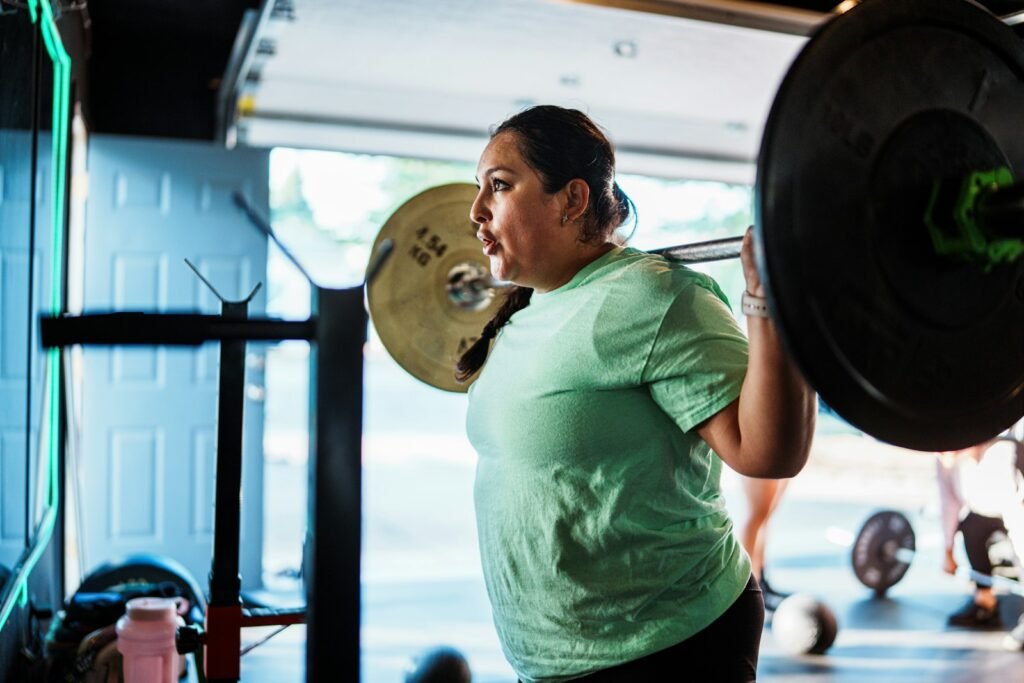
For most adults, the research points to a surprisingly modest amount: about 30 to 60 minutes of strength training a week, spread over two or more sessions. In large studies, people who did muscle-strengthening exercise had roughly a 10 to 20% lower risk of dying from any cause than people who did none, and the biggest drop showed up at around 30 to 60 minutes a week. Doing much more didn’t add further benefit in that research. The World Health Organization recommends strength work for all major muscle groups on at least two days a week, alongside regular aerobic activity. These studies show a link, not proof, but strength training also makes everyday life easier, and combined with balance work it helps lower the risk of falls.
The short version
- Two sessions a week is the baseline. That’s the WHO recommendation for adults of every age, covering all the major muscle groups.
- 30 to 60 minutes a week is where the largest benefit showed up in pooled studies. More than that didn’t add extra benefit in that research.
- Some is much better than none. Any regular strength training was linked to a lower risk of death from any cause, heart disease and cancer.
- Strength plus cardio beats either alone. People who did both had the lowest risk.
- It’s never too late to start. Older adults build meaningful strength with progressive training, and exercise that includes strength and balance work reduces falls.
Why strength matters as you get older
Muscle strength and muscle mass decline with age, even in healthy people. That gradual loss makes everyday tasks harder over time: getting up from a low chair, climbing stairs, carrying shopping, catching yourself if you trip. When the loss becomes severe, it has a name, sarcopenia, which European experts now define mainly by low muscle strength, because strength predicts how well people function better than muscle size does.1
The good news is that muscle keeps responding to training throughout life. A position statement from the National Strength and Conditioning Association describes resistance training as a powerful way to counter the loss of strength and muscle with age, with benefits for mobility, independence, managing long-term conditions and quality of life.2
What the research says about strength and lifespan
Two large reviews pulled together the long-term studies on this question.
The first combined 16 studies of adults followed over time. People who did muscle-strengthening activities had a 10 to 17% lower risk of death from any cause, and a lower risk of heart and blood vessel disease, cancer and type 2 diabetes. The relationship was J-shaped: the largest reduction, roughly 10 to 20%, came at around 30 to 60 minutes a week, and the benefit didn’t keep growing beyond that. People who combined strength work with aerobic exercise had the lowest risk of all.3
The second review, of 10 studies, found that doing any resistance training was linked to a 15% lower risk of death from any cause compared with none. The largest reduction, 27%, was seen at around 60 minutes a week, and again the benefit tailed off at higher amounts.4
Both reviews are based on observational studies. People who lift weights may differ in other ways, such as diet, income or overall health, and the studies can’t fully separate those factors. What they do show clearly is that you don’t need hours in the gym to be in the range linked with the most benefit.
Should you avoid doing more than an hour a week?
No. The levelling off at higher amounts may reflect the small number of people in these studies who trained a lot, or other differences between them. It isn’t evidence that more training is harmful. If you enjoy training more, and recover well, there’s no reason to cut back. The point is that the starting dose is smaller than most people think.
How much is enough? The guidelines
The WHO’s 2020 guidelines recommend that all adults do muscle-strengthening activities at moderate or greater intensity, working all major muscle groups, on two or more days a week. That sits alongside 150 to 300 minutes of moderate aerobic activity, such as brisk walking, or 75 to 150 minutes of vigorous activity each week.5
For adults over 65, the guidelines add varied activity that combines balance and strength training on three or more days a week, to improve function and prevent falls.5
| Goal | What it looks like in a week |
|---|---|
| Minimum effective dose | 2 sessions of 15 to 30 minutes, covering legs, hips, back, chest, shoulders and arms |
| The range linked with the most benefit | 30 to 60 minutes in total, across 2 or 3 sessions |
| Over 65, or with balance concerns | 3 or more days with strength and balance work combined |
| Alongside | 150 to 300 minutes of moderate aerobic activity, such as brisk walking |
What a simple routine looks like
A good programme covers the basic movement patterns your body uses every day. You can do these with body weight, resistance bands, dumbbells or machines.
- Squat or sit-to-stand for the legs and hips. Getting up from a chair is a squat.
- Hip hinge, such as a deadlift or bridge, for the back of the legs and the hips, the muscles that lift things off the floor.
- Push, such as a push-up, wall push-up or press, for the chest, shoulders and arms.
- Pull, such as a row with a band or dumbbell, for the upper back and arms, which also helps posture.
- Carry: walking while holding a weight in each hand, for grip, trunk and overall strength.
- Step-ups or lunges for single-leg strength and balance.
A common starting point is one to three sets of 8 to 12 repetitions of each, with a weight that feels challenging by the last few reps but still lets you move with good control. When that gets easier, add a little weight or a few repetitions. That gradual increase, called progressive overload, is what keeps strength building.
A 25-minute starter session, twice a week
- Sit-to-stand from a chair: 2 to 3 sets of 10
- Bridge: 2 to 3 sets of 10
- Wall or bench push-up: 2 to 3 sets of 8 to 12
- Band or dumbbell row: 2 to 3 sets of 10 each side
- Step-up onto a low step: 2 sets of 8 each leg, holding a rail if needed
- Farmer’s carry: 3 walks of 20 to 30 metres
Rest about a minute between sets. If any exercise causes pain, stop and get advice before continuing.
Is it too late to start?
No. A Cochrane review of 121 trials with 6,700 older adults found that progressive resistance training, usually two to three times a week, had a large effect on muscle strength. It also improved everyday function, including walking speed and the ability to get out of a chair.6
Strength matters for falls too. A separate Cochrane review of 108 trials found that exercise programmes for older people living at home reduced the rate of falls by 23%. Programmes combining balance and functional exercises with strength work probably reduced falls by about a third. The effect of strength training on its own, without balance work, was uncertain, which is why balance practice belongs in any longevity routine.7
If strength is new to you, it helps to start lighter than you think you need to, learn good technique, and build gradually. Our guide to mobility tests linked to longevity has four simple checks you can use as a baseline, then repeat every few months to see your progress.
Training with pain or an old injury
Back pain, knee pain or an old shoulder injury are some of the most common reasons people avoid strength training. In most cases, the right kind of strength work is part of the solution, not something to avoid. For example, exercise is one of the best-supported treatments for chronic lower back pain, as our article on exercises for lower back pain explains.
The key is choosing exercises your body tolerates now, then progressing them. A physiotherapist can assess what’s limiting you, adapt movements around pain, and build a plan that gets you lifting with confidence. You can read how we approach this on our physiotherapy in Dubai page.
Check with a doctor before starting if you have
- Chest pain, breathlessness or dizziness with exertion
- Heart disease, uncontrolled high blood pressure or a recent heart event
- A recent fracture, surgery or joint replacement
- Osteoporosis with previous fractures
- Pregnancy, if you’re new to strength training
Stop exercising and seek medical help straight away if you get chest pain, severe breathlessness or feel faint. In the UAE, call 998 for an ambulance in an emergency.
Frequently asked questions
How many times a week should I strength train for longevity?
At least twice a week, working all the major muscle groups. That’s the WHO recommendation for adults of all ages. Adults over 65 benefit from strength and balance work on three or more days a week.
How many minutes of strength training a week is enough?
In pooled studies, the largest reduction in risk of death was seen at around 30 to 60 minutes of strength training a week. Any regular strength training was linked to lower risk than none at all.
Is walking enough, or do I need strength training too?
Both help, and they help in different ways. People who combined strength training with aerobic activity such as walking had the lowest risk in the research. Walking alone doesn’t build much strength in the upper body, back or hips.
Can you build muscle after 50 or 60?
Yes. Trials in older adults show that progressive resistance training produces large gains in strength and improves everyday tasks like walking and getting out of a chair. Starting gently and building gradually is the safest approach.
Do I need a gym to strength train?
No. Body weight, resistance bands and a pair of dumbbells are enough for a complete routine at home. What matters most is covering the main movement patterns and gradually making the exercises harder over time.
References
- Cruz-Jentoft AJ, Bahat G, Bauer J, et al. Sarcopenia: revised European consensus on definition and diagnosis. Age Ageing. 2019;48(1):16-31.
- Fragala MS, Cadore EL, Dorgo S, et al. Resistance training for older adults: position statement from the National Strength and Conditioning Association. J Strength Cond Res. 2019;33(8):2019-2052.
- Momma H, Kawakami R, Honda T, Sawada SS. Muscle-strengthening activities are associated with lower risk and mortality in major non-communicable diseases: a systematic review and meta-analysis of cohort studies. Br J Sports Med. 2022;56(13):755-763.
- Shailendra P, Baldock KL, Li LSK, Bennie JA, Boyle T. Resistance training and mortality risk: a systematic review and meta-analysis. Am J Prev Med. 2022;63(2):277-285.
- Bull FC, Al-Ansari SS, Biddle S, et al. World Health Organization 2020 guidelines on physical activity and sedentary behaviour. Br J Sports Med. 2020;54(24):1451-1462.
- Liu CJ, Latham NK. Progressive resistance strength training for improving physical function in older adults. Cochrane Database Syst Rev. 2009;(3):CD002759.
- Sherrington C, Fairhall NJ, Wallbank GK, et al. Exercise for preventing falls in older people living in the community. Cochrane Database Syst Rev. 2019;1:CD012424.

About Somatic Recovery
Somatic Recovery is the Dubai practice of Shubhangii Gaikwaad, DHA-Licensed Physiotherapist (MPT, Neurology) with 16 years of clinical experience. Sessions in person in Dubai and online worldwide, in English and Hindi.
This article is general information, not a diagnosis or a substitute for an individual assessment. If you have severe, sudden or worsening symptoms, see a doctor.
Somatic Recovery · Dubai & online
Want this looked at properly?
One assessment with a DHA-licensed physiotherapist to understand what is driving your symptoms, with a clear plan and an honest timeline.
Keep reading
 Recovery & ResetBalance After 40: Why It Matters for Longevity and How to Train ItBalance starts slipping earlier than most people think. Here's how it changes with age, why it matters, and how to train it in a few minutes a day.7 min read→
 Recovery & ResetMobility and Longevity: 4 Simple Movement Tests Linked to Healthy AgeingGetting up off the floor, standing on one leg, grip and walking pace: four quick tests linked to healthy ageing, and how to train each one.7 min read→
 PhysiotherapyRotator Cuff Pain: Symptoms, Causes and What HelpsShoulder hurts when you lift your arm? What rotator cuff pain is, why exercise comes first, and when to see a doctor.7 min read→