Dry Needling in Dubai, by a Specialist Physiotherapist
Dry needling uses fine, sterile needles to release tight, over-active muscle points that keep pain and stiffness going — in the neck, shoulders, back, hips and more. Here it's never a stand-alone fix: it's one precise tool inside a plan that treats why the tension is there.
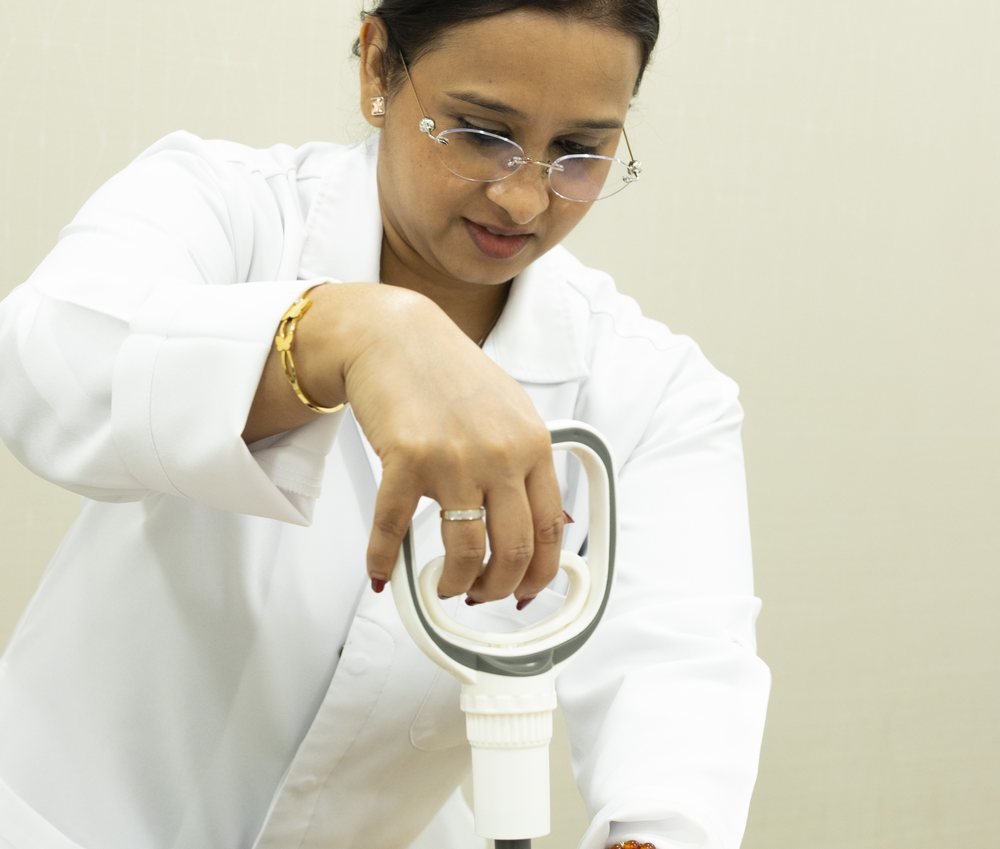
Tension that keeps coming back.
What Is Dry Needling — and How Does It Work?
When a muscle stays under load too long — injury, posture, stress, repetition — small areas lock into contraction. These trigger points ache, refer pain elsewhere, and quietly limit movement. A fine, sterile needle placed directly into that point releases what massage often can't reach.
What Dry Needling Helps With
Anywhere a tight, over-active muscle point keeps pain and stiffness going.
Neck & shoulder knots
The classic trigger points of desk life — the ones your thumb finds but can't release.
Tension-type headaches
When headaches trace back to trigger points in the neck and upper shoulders.
Lower-back guarding
Deep muscular tension that braces the spine long after the original strain has healed.
Elbow & forearm overuse
Tennis and golfer's elbow patterns fed by tight forearm and shoulder chains.
Sports strains
Calves, hamstrings, glutes — releasing the points that limit power and range.
Knots that keep returning
When massage relief fades in days, needling reaches the point at its source — inside one root-cause plan.
Dry needling vs acupuncture.
They look similar — both use fine needles — but they come from different worlds and do different jobs.
- Based onWestern anatomy & neurophysiology
- TargetsMyofascial trigger points in muscle
- GoalRelease tension, restore movement, reduce pain
- Delivered byA certified physiotherapist, inside a treatment plan
- Based onTraditional Chinese medicine
- TargetsMeridian energy points
- GoalBalance energy flow (qi)
- Delivered byAn acupuncturist
Thirty minutes, honestly told.
Assess
We map the trigger points feeding your pain pattern — not just the sore spot.
Release
Fine, sterile, single-use needles. A brief twitch or dull ache — not sharp pain.
Rebuild
Hands-on treatment and movement in the same session, so the release holds.
Settle
Mild post-workout soreness passes; the looseness stays.
Afterwards: what to expect.
Worked-muscle soreness
A dull, post-workout ache is normal. Gentle movement and water help it pass.
Noticeably looser
Most people feel the difference in range and tension within a day or two.
Patterns retrained
Lasting change pairs release with movement retraining — so tension doesn't rebuild.
Who it's for — and who should wait.
A good fit if you have…
- ✓Knots that keep returning despite massage or stretching
- ✓Pain that refers — a shoulder that becomes a headache
- ✓Stiffness limiting training, work or daily movement
- ✓An old injury area that never fully let go
We assess first — or hold off — if…
- !You're pregnant (some areas avoided; alternatives used)
- !You have a bleeding disorder or take blood thinners
- !There's infection or a skin condition at the area
- !Needles are a hard no — much of the toolkit works without them
Every session starts with a physiotherapy assessment — the needle is only used where it's the right tool for your pattern, never by default.

Sixteen Years Behind Every Placement.
A needle can release a trigger point — but it can't tell you why that point formed. That's what clinical assessment is for. Dr. Shubhangii Gaikwaad (MPT Neurology) uses dry needling inside a full physiotherapy plan: find the pattern feeding the tension, release it precisely, then retrain the movement so it doesn't come back.
That's also the safety difference — certified technique, single-use sterile needles, full screening before any needle is placed, and honest advice when dry needling isn't the right tool for you.
- ✓Sterile, single-use needles
- ✓Full screening before any placement
- ✓Clear consent — nothing is a surprise
- ✓Honest alternatives when needling isn't right
Hands-On, In Person — Never Over Video.
Dry needling is precise, hands-on work — it's the one service that never happens online. Sessions take place in person in Dubai, always with the same specialist. Location and full details are shared on your consultation.
Book a session- ✓Sterile, single-use needles — every time
- ✓Certified, 16 years clinical
- ✓In-person sessions in Dubai
- ✓Honest alternatives if it's not for you
Dry Needling Across Dubai
Sessions run in person in Dubai — always the same specialist, always sterile single-use needles:
Dry needling FAQs.
Does dry needling hurt?+
How much does dry needling cost in Dubai?+
Is dry needling the same as acupuncture?+
Are there side effects?+
Who should not have dry needling?+
Can I have dry needling at home in Dubai?+
Ready to Release What's Been Holding On?
One assessment, honest expectations, and a plan that treats the reason the tension is there.